Blog > Retail Space for Lease in Easton: Available Properties & Market Guide
Retail space for lease in Easton can put a business near downtown shoppers, College Hill activity, neighborhood services, and vehicle-oriented commercial corridors. Demand comes from recurring events, visitors, students, residents, and regional customers. Vacancy and available space vary by building condition, permitted use, visibility, and landlord requirements, so there is no single citywide pattern to rely on.
Why Retail Businesses Choose Easton
Easton offers several location formats within a compact city that blends historic downtown activity, an institutional presence, and neighborhood-serving shops.
1. Downtown Offers an Established Shopping Setting
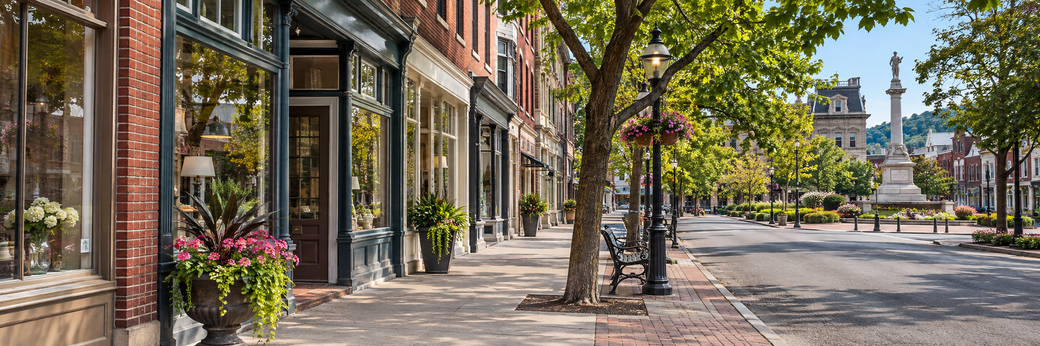
Downtown Easton brings together shops, cafés, restaurants, markets, cultural venues, and historic streets. The City identifies downtown as a primary shopping area and also highlights College Hill businesses and neighborhood retail destinations in its Easton lifestyle guide.
2. Events Can Support Repeat Visits
Easton hosts recurring public events that give people more reasons to come into the city. The municipal calendar includes farmers market dates, seasonal programs, and community events, which can help businesses whose hours and merchandise fit those activity patterns.
3. College Hill Adds Another Customer Base
Lafayette College gives Easton a distinct institutional presence. Retailers near College Hill can consider student, employee, family, alumni, and visitor activity when deciding whether a walkable location fits their concept.
4. Retail Formats Can Match Different Operations
Retail spaces vary widely in property type, square footage, storefront visibility, parking, and zoning permissions. A specialty shop may value window exposure, while a service business may need convenient parking, an accessible entrance, and room for appointments.
5. Easton Requires a Site-Specific Use Review
A space that looks right may not automatically allow your business use. The City's Zoning Office reviews permitted uses and development standards, so confirm early before committing to a location.
Types of Retail Space for Lease in Easton
Retail space in Easton includes formats that serve pedestrian, neighborhood, destination, and drive-to business models.
- Strip centers and inline spaces: Neighborhood shopping plazas with shared parking and nearby services.
- Standalone or pad buildings: Single-tenant buildings that may offer a dedicated entrance, strong street visibility, and possible drive-thru potential.
- Downtown storefronts: Street-level spaces in walkable corridors or historic commercial areas.
- Shopping center spaces: Enclosed or open-air centers with shared parking and a broader retail mix.
- Restaurant and quick-service spaces: Units that may need grease traps, venting hoods, adequate utility capacity, patio approval, and delivery access.
- Big-box and anchor units: Large-format spaces suited to grocery, fitness, general merchandise, entertainment, or other high-capacity uses.
For a feel of the surrounding trade area, it helps to know what makes each part of Easton distinct.
Retail Districts and High-Traffic Corridors in Easton
The best retail area depends on whether your business needs foot traffic, nearby institutional activity, destination visits, easy vehicle access, or shared parking.
| Retail Area | Leasing Considerations |
|---|---|
| Downtown Easton | Historic storefronts, restaurant activity, public events, foot traffic, public parking, and established commercial streets |
| College Hill | Proximity to Lafayette College, residential areas, visitors, and businesses serving daily neighborhood needs |
| Centre Square area | Visibility near a central downtown landmark, walkable connections, and event-related activity |
| South Side and river-adjacent areas | Site-specific access, parking, building condition, delivery needs, and permitted-use review |
| Plaza and freestanding sites along Easton's commercial corridors | Vehicle circulation, signage, shared parking, and neighboring uses affect daily operations |
Look past the advertised square footage. Traffic patterns, parking turnover, storefront visibility, nearby anchors, delivery routes, and how easy the entrance is to reach all shape customer convenience. Downtown tenants should consider event schedules and foot traffic, while plaza tenants should review access points, cross-easement rights, and the mix of neighboring businesses.
What to Consider When Leasing Retail Space in Easton
A retail lease should spell out the full occupancy cost, permitted use, and operating responsibilities before you sign.
Start with the lease structure. A triple net (NNN) lease usually separates base rent from your share of property taxes, building insurance, and common area maintenance (CAM). A modified gross or full-service lease may include some expenses in the rent, but confirm which costs remain separate and how year-end reconciliations work.
Pay close attention to build-out terms. Review any tenant improvement allowance, rent-free period, construction responsibilities, minimum lease length, renewal options, and what you must restore when you move out. Confirm that utility capacity, HVAC, plumbing, grease-trap needs, venting, signage rights, façade visibility, parking, and delivery access fit your plan.
Easton also requires practical municipal review. The City asks commercial-use applicants for details such as the business type, occupied square footage, and available parking. Eating or drinking establishments also need a floor plan showing seating, restrooms, and kitchen areas. Sign installation requires zoning review, and properties in a historic district may need additional approval from the Historic District Commission.
Pro Tip: Visit a site during the hours that matter most for your business, then return at a different time of day. Watch parking availability, how customers arrive, storefront visibility, delivery activity, and how easily a first-time visitor finds the entrance.
Leasing vs. Buying Retail Property in Easton
Leasing retail space
- Much lower upfront investment than buying
- More flexibility to relocate, grow, or change direction
- Easier monthly budgeting when base rent and estimated expenses are clearly stated, though CAM or NNN reconciliations can change over the lease term
- Less direct ownership exposure, but review NNN, repair, maintenance, and capital-expense language since some costs may be passed through
Buying retail property
- Potential to build equity over time
- Full control over site changes, tenants, and building use
- Larger upfront costs, including down payment and financing costs
- Full responsibility for maintenance, property taxes, and structural upgrades
Opening a Second-Act Business or Leasing Out a Building You Own
Many Easton retail tenants are people starting a business later in life, turning a hobby, craft, or professional skill into a storefront. If that's you, a shorter initial term with renewal options can limit risk while you test the location, and a clear personal guarantee limit protects your savings.
If you already own a retail building and are thinking about leasing it to others instead of running a business there yourself, the same lease terms apply from the other side. Clear NNN language, defined maintenance duties, and well-documented tenant improvements make the building easier to manage now and easier to sell later. A current value review can help you compare leasing the building against selling it.
Get Local Help With Your Easton Retail Search
Sonia Castro has led Sunny Curb Appeal from its Easton base for more than 20 years, guiding business owners, landlords, and investors through commercial leases and purchases. Her team meets clients in person, compares sites against your real operating needs, reviews lease terms and expense estimates, and helps coordinate zoning questions with the City before you commit. You can also see current commercial listings to get a sense of what's available.
Call (484) 554-7672, email soniaalexanderc@gmail.com for no-pressure answers about leasing retail space in Easton.
Frequently Asked Questions
How much does retail space cost to lease in Easton?
Retail rent is usually quoted as an annual amount per square foot, with estimated NNN or CAM charges added when they apply. The total varies by location, storefront visibility, parking, condition, tenant improvements, lease length, and the building systems your business needs.
What types of retail spaces are available for lease in Easton?
Options range from strip-center suites and downtown storefronts to standalone buildings, pad sites, restaurant-ready units, and larger shopping-center spaces. The best fit depends on customer access, signage, utilities, deliveries, parking, and whether foot traffic or vehicle visibility matters more.
What is included in a retail triple net (NNN) lease?
A retail NNN lease generally requires the tenant to pay base rent plus its share of property taxes, building insurance, and common area maintenance. Before signing, review the expense estimate, how reconciliations work, any caps, and the language covering repairs and capital items.
Can I negotiate a tenant improvement (TI) allowance with the landlord?
Yes. Landlords may offer a TI allowance or an initial rent-free period when a tenant has strong qualifications and signs a longer lease. The amount depends on the space's condition, the business use, construction needs, credit profile, and the landlord's view of the tenancy.
Should I work with a tenant representative to lease retail space?
Yes. A commercial representative can make site selection, lease negotiation, market-rate comparison, and contract coordination easier to manage. Tenant representation is commonly paid within the transaction, but confirm representation terms and any costs before starting your search.